Remember those anomalies in the jungle in bronze

Craft Zeppelin··60 votes·2,392 views

I still recall those days when i was in bronze tier. In a game which every lane was winning, around 20 mins suddenly our master Yi jungle gets pulled into a huge gravitational field made by a large celestial object within the enemy jungle and he is unable to respond to pings to back since the disturbance in radio waves are jamming our communications and gets killed 5 times in a row there. I am quite certain it is a black hole singularity because its invisible to the naked eye, since i have checked their jungle quite a lot by warding the area. Another evidence that this is a cosmic gravitational phenomenon is because our master yi always says "LAG" when he gets pulled in which must stand as a acronym for "Largely Accreting Gravity".

The wierd thing is this anomaly never can be seen within our jungle. ever

10 Comments

BetaDude4031 votes

I must note here that this effect (We'll dub it the Zepellin-Yi Theorem of Jungle Dynamics) is especially noticeable only upon champions that are denoted to have high skill values required, as specified by the mains that use them, e.g. Master Yi, Lee Sin, ect.

I would like to point out Dr. iZpixl5's brilliant research paper on the dynamics of Master Yi and the way that he interacts in a standard match. He makes some really good points, even if the information is slightly outdated in today's modern world.

Now, according to my own studies, if the Feral Flare Recurring Farm Theory is indeed true, then it can be applied to its similar item, the elusive Sated Devourer (we've only been able to detect this item in controlled quantities, namely on Master Yi mains as well as stupid Vayne mains, and several other places as well). Now, if it indeed true that the average Master Yi main will behave accordingly with that particular item, accounding for skill level, the Dunning-Krugs Effect, Heimerdinger's Theory of Jungle Meta Relativity, and several other factors, we can formulate the following:

https://upload.wikimedia.org/math/9/6/d/96d43b8af07f1fa6fff5f0d7869a1234.png https://upload.wikimedia.org/math/9/3/5/9355a95f5b06b123f6b5e32f78f30133.png https://upload.wikimedia.org/math/d/6/f/d6f576408775e7eb4f6f8863f886ec67.png

Which can put simply as:

Singularity=True

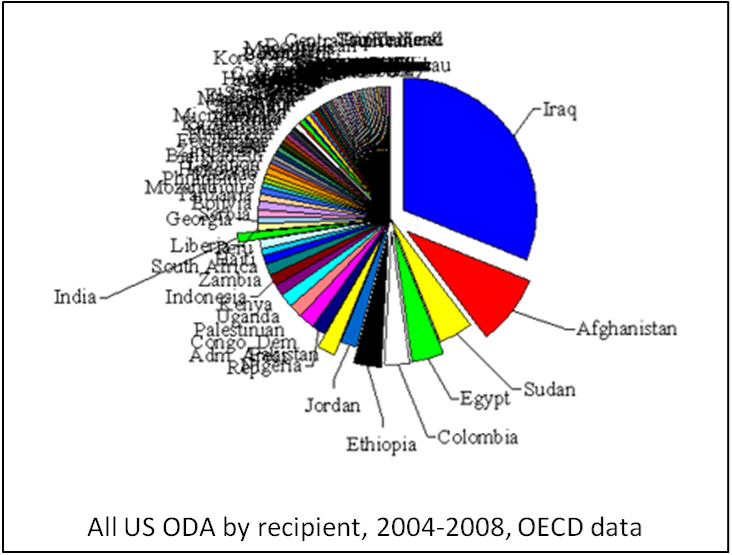
So yes, your theory does hold up. I believe we need some graphs to prove it is a sound theory.

http://image.mathcaptain.com/cms/images/41/bar-graph-picture.gif https://wattsupwiththat.files.wordpress.com/2009/04/uc_seallevel_2009r1.png https://gcoinc.files.wordpress.com/2012/02/us_aid_graph.png

Bouffon dAnglais2 votes

Hmmm. Fascinating, indeed. What, in your opinion, is the main cause of the Zeppelin-Yi Theorem of Jungle Dynamics, and what can be done to mitigate it's negative effects?

Also, I f*ckin lost it at the fruits graph.

iHerring2 votes

Accepting that the effects of the Z-Y Theorem above are suitably proven and the cause for these high skill anomalies is LAG, I wonder what the authors have to say regarding the variation around champions not traditionally associated with jungling, yet still appearing to suffer the effects of LAG?

You reference your work around Vayne mains. Although this research is of great use for jungling analysis, less work has been done surrounding the apparently temporary LAG events near enemy towers and large groupings of enemy champions. Whilst not unique to them, this seems to affect a disproportionate number of Vaynes.

Is it possible that LAG events are occuring all over the map but are only noticed due to some currently unknown interaction with high concentrations of Devourer?

I hypothesise that the growth and 'attractiveness' of the LAG is not a fixed value and increases with higher presence of Devourer emissions in their non Sated state. The key difference is that LAGs can also noticably occur in champions with high skill requirements yet no presence of Devourer, Sated or otherwise. Together with a few other researchers, we are proposing that the LAG acts under the effect of Ezreals Gravitational Growth ratio (working title, named for proponent). This ratio value greatly increases in the presence of Devourer as we'd expect, but is also subtly influenced by champion requirements of skills and mechanics, causing relatively minor LAG events to occur in non jungle areas where these skills and mechanics are most used, namely under towers and in multi opponent situations.

I regret that due to the preliminary nature of this work, suitable graphs are yet to be properly developed.

BetaDude402 votes

This is a great idea. I have observed your team's methods and looked through their research papers, and I can seem to agree that the data points, despite the lack of graphs and diagrams, seem to line up very well to prove several other theories that could even be far outside of the standard Jungling Research fields.

I am fairly certain you are aware of the Law of Recurring Vayne Mains, where it is said that every Main that is attached to that of Vayne is subject to Toxicity values well bordering 0.75 given unfavorable conditions (for reference, an average main particle that is not a troll will exhibit around 0.1 toxicity, and maybe a spike to 0.3 if an imperfect play was made, as well as a spike in immediate sodium levels found (I assume you already know this, though))

Now, in a closed jungle environment, let us, just for the purposes of this example, assume that we have a Recurring Vayne Main playing in the jungle (we don't have to assume they are or are not attached to Vayne at this particular point in time due to the nature of the theory). If we account for the abnormally high toxicity, we use the following function:

sin(Toxicity/Sodium)+ | -10(Kills / Deaths) | + (LaneMetaSynergy) + (ApparentSkill / e) + (Ping) + (ChampionsOnScreen x 100) + (Rank / -RankDivision) = Apparent LAG experienced

[Just a note: LaneMetaSynergy is a percentage dependent on all of team synergy (how well they fit in team comp), champion synergy (how well they fit in the particular role they are in), and meta synergy (how well they are currently doing given the appropriate meta shift given to Phreak's Law). However, as we all know, Vayne is the perfect champion in the eyes of Rito, so this value will always be at 100% no matter the situation]

Now, if we can assume that these values are true, and we are using the average non-troll Vayne jungle main (I know, kind of oxymoronic, but again, this is all in theory) with high skill levels (because, again, Vayne is the perfect high-skill champion in the eyes of Rito), and the Vayne is currently going at 0/0, Silver 5, and with a ping averaging around 60 (values according to recent server move, assuming they are on the east coast), then they will experience LAG values of the intensity equivalent to 2000 ping at a 24.5321% recurrence (if all 10 champions are on screen, this drives it up to 79.4625% recurrence)

I know applying these theorems to Vayne mains may seem strange, but perhaps a same system could be applied to calculate relative LAG among other champions? Thus, if we can calculate the relative lag for a given, standard scenario for every champion, we can determine an average for the EGG as you discussed. Then, we can run more tests, trying to fabricate Sated and non-Sated Devourers for the value of the test, and seeing how exactly they contribute to this effect.

I've asked the Ministry of Jungle Research and Meta Development in Relation to the Jungle if they can crate enough graphs to convince the scientific community of our findings.


iHerring1 votes

You make some excellent points and I think your closed jungle environment Vayne example is well presented and effective for jungle use whilst also reasonably allowing for adaptations to laning environments. However I feel that we may be approaching the same thing from different directions and I have a few observations on your proposals so far that might be of value for you to consider.

The apparent LAG function does not appear to account for the proximity of towers to the subject champion, nor to the relative number of nearby friendly and enemy champions. Whilst you do clearly account for the overall number of champions on screen, the effects of non jungling LAGs are most commonly observed near enemy towers and when the subject champions team is locally outnumbered. I would suggest you include Freelo's Team Overweighting Factor as part of the function to address this, thus changing your

(ChampionsOnScreen x 100) to (ChampionsOnScreen x 100 x (EnemyChampionsWithin750 / FriendlyChampionsWithin750 + 1))

Not counting the subject itself as a friendly champion, this adjustment results in potentially a 5 times increase in apparent LAG and at a minimum leaves your function unchanged. Freelo's choice of 750 range for his factor is sometimes controversial but given the common ADC ranges of approximately 550 it should stand without adjustment for our purposes.

As for the proximity of towers, together with Freelo's TOF the overwhelming evidence is that this only occurs near enemy towers and when outnumbered by enemies. Therefore I adopted the TOF and not the inverted TOF above. Similarly in the tower situation I think we can comfortably adjust the function (which from here on I'll refer to as the BetaDude40 Apparent LAG Function a.k.a. BD40ALF, or ALF for short) to account for this perceived increase in LAG the nearer to enemy towers the subject proceeds.

I would propose the addition of something similar to the following to the ALF: ((1 / ChampionLevel) x (1000 / EnemyTowerDistance) x (3600 / GameTime))

We can simply see that the value of ALF would be increased as the subject approached an enemy tower and decreased as the subject leveled up and naturally became stronger as the game progressed. Obviously with the size of the current map, TowerDistance should be discarded for suitably large values. For the purposes of further development, I have chosen 1000 units as the point at which an enemy tower will stop influencing subjects LAG. Also, using the current interpretation of Phreaks Law I have chosen a maximum game time of 60 minutes.

Using your original ALF with these adjustments, we get: The Vayne main from your example, but this time standing at 250 distance from an enemy tower, at level 3 and only 7 minutes into the game. With 3 enemy and 1 friendly champions within 750 range of the Vayne (assuming a bot lane Vayne/support situation) we arrive at an astonishing LAG of 6450 with a recurrance of 91.6315%.

I look forward to your responses on these suggestions and offer a direction of possible further research. As it would stand with only my adjustments above, the ALF treats the TOF and EnemyTowerDistance as completely seperate entities. Anecdotal evidence suggests that there may in fact be an additive or multiplicative relationship between these effects, causing much greater LAG when combined than otherwise expected.

Doctor Dyment4 votes

SIR! Our Jungle Operative is not responding to our signals! What? Why? Do you know the reason? No sir, I cannot pinpoint the reason as to why he does not respond! Wait, what is that? Its.... Oh God no. SIR! THERE'S A BLACK HOLE IN THE WAY! ITS DISRUPTING OUR SIGNALS! Pull us OUT damn it! I can't! The gravitational force is getting too strong! Quick! The enemy team are all closing in on the Jungle Operative! Send SOMETHING!

Ping

And ally has been slain

Lag

A summoner has disconnected

Reaper Soraka1 votes

Quasars are so pretty. ... What were you saying again?

Petrablaze1 votes

So the enemy has a JG Veigar?

fantastic dud1 votes

wow, this is like the smartest thread that was ever posted in here, i feel intimitated by how much u all know.SO,SO MUCH INFORMATION. but i think that my freind Velkoz would have a better explenation. ITS ALL IN THE VOID.

More from Memes & Games

More by Craft Zeppelin