There are two ideas I want to draw attention to, mostly.
The first of which is the 'changing of the guard'.
The original writers and storyline developers are, to the extent of my knowledge, almost certainly not with Riot any more. There is a certain difficulty in inheriting another artist's work, in due part because you are not them. If there is no documentation, especially thorough and precise, the new guard has the insanely difficult task of trying to carry on the old's work. To complicate this affair, the new guard has a different perspective, which means their vision may not align with the old whatsoever.
This is just the technical, the bones of the body, level administration.
Your new writers have to have a clear goal, idea, and the ability to present a vision that's in line with the previous product. Then there is customer expectation management, deliverance, and quality control to make sure your new work actually does its job. Consequentially, there is an adjustment period, an extensive internal R&D phase, and so forth. Then, once you have your new work force up to speed, they have to hit the ground running and not stop.
If the conditions are not right, this process takes magnitudes longer, and the real possibility exists your new writers may simply not work. Maybe they're incompatible, maybe they quit/are fired, etcetra ... the whole process can be triggered over again on a whim, potentially destroying hundreds of hours of time and money. Even the most stalwart advocates of story writing can pause at such an idea - no matter how much you like doing it, throwing money into a fire burns your house down eventually.
Our goal is to throw just enough money the fire burns brightly, but not dangerously. Everything is a balancing act in regards to that, because if we don't have a house, nothing will get made - full stop.
The second idea is the very struggle of artistic agency.
There is something to be said about 'wiping slates' and starting over again. Building a lego construct, a Minecraft fortress, or what have you - using methods and ideas the first time around, you know what to do differently in the second. Better or worse? It's hard to say, you have to create it to observe the improvements. Sometimes it is, sometimes it is not, at the end of the day.
Mass retcons and rewrites are the nuclear options for writers - scorching the earth so completely that the vision can be rebuilt with modern improvements. Yet artistic vision grapples with expectation and sentiment: your work could be objectively better, but factually worse because your readers care more about the old work. There's nothing you can do about that. In some ways, trying to cater to this group just stifles your talents and vision, and you can't put your heart into the work. Why create then, when it's just some assembly line product that your soul cannot be put into?
By necessity there is a pain to improving or creating, as much as we human animals loathe and despise it. Some people will lose when it happens, others still will win - the mutable viewership will change, but we can only see for better or worse after the fact. If our work succeeds, we can continue on course because we have the confidence of understanding our path.
If our work fails, we have to revisit everything and find something different. We have to unlearn what we did, and learn something completely new again. Time, energy, effort. Resource costs. At the end of it, we may simply find ourselves too tired to bear the burden.
I do not write this to excuse them, or belittle your feelings on the matter. It is the mechanical, systemic design that produces artistic work that I want to address. If we have that understanding, when we as consumers say, 'your product is terrible, please fix it', we will do so with the understanding of the people designing it. They may not be able to do what we ask, and Riot will have to find people who can. If so, we won't have anything for a long time - and in doing so, people will question why resources are even being put into the effort. Why devote resources into a blackhole that has the promise of returning something, maybe?
Starving artists is a cute idea, but a corpse cannot make art.
The cold reality is that a perfect storm may not happen and we will lose out - consumers and creators alike - because the machine could not be built to perform.


 . I suggest that Riot does another thing like this, where two factions are pitted against each other, deciding the lore through losing or winning a game.
 )
)
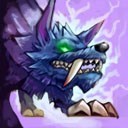
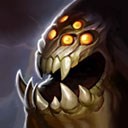

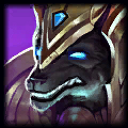 and
and  being on different worlds as brothers. 1 Beast faction saw the potential of the humans and so helped them. The other faction thought they were superior and started a war. Brother vs Brother until summoned to the League. Their lore went in-depth too instead of the measly couple sentences they now have. I stopped playing Nasus because of his lore change.