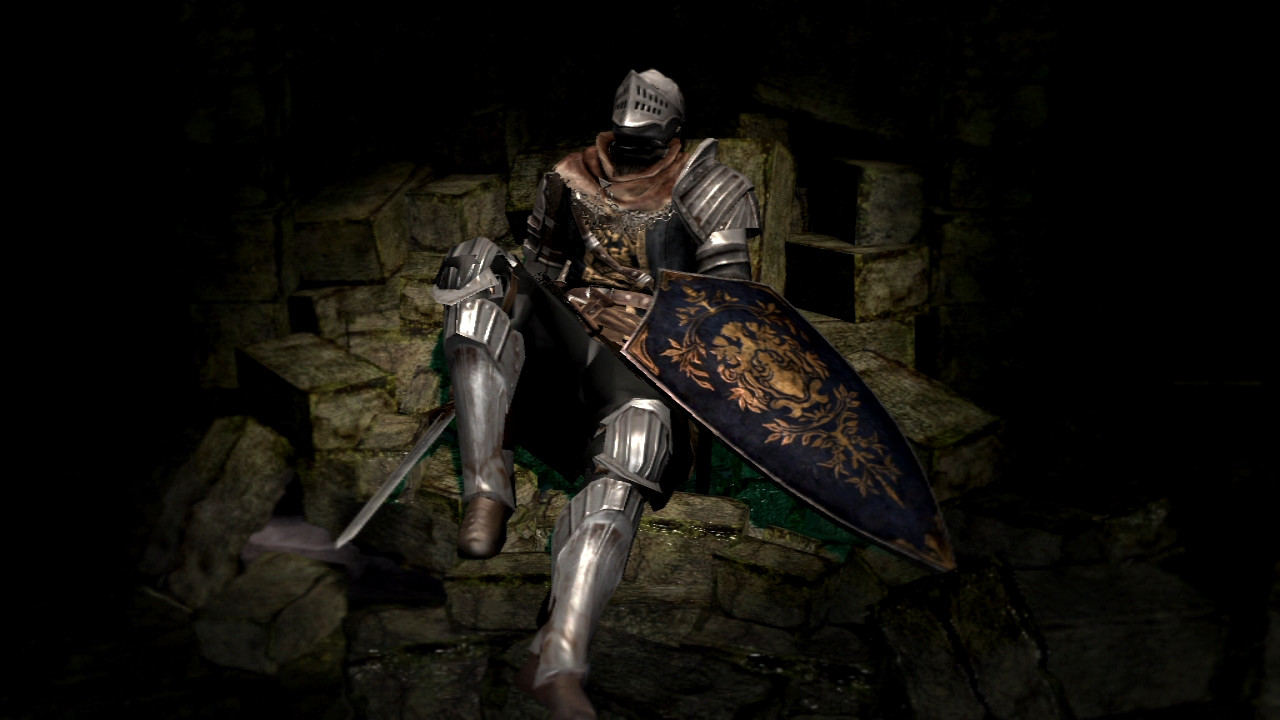
My concept of knighthood is very different to the one you here describe. As I understand it generally a knight was simply someone who exhibited the proper traits of courage and behavior and both swore to and was chosen to serve their sovereign and/or country. Often people trained as a squire under a knight to become a knight, but not always. Nobility was required in some cases depending on era and country, but that was mostly the exception. What was generally required was the means to maintain readiness (read: equipment and training), and that often created a wealth barrier to knighthood, but in some systems being a knight meant being granted a living that could meet that requirement, especially in systems where knighthood was tied to the military. So then:
Runeterra isn't the only place knights could come from.  could just be a knight from another world, and given that the IoW is being retconned out, he'll almost certainly be from Runeterra once his lore is redone.
Being from a warrior culture wouldn't preclude one from being or becoming a knight, and knights were often gifted mystic armor in fantasy settings. Being the chosen of something/someone and being given arms and armor to fight in the name of it would definitely put  as either a paladin, knight or both. As I understand it, the two weren't always mutually exclusive.
Being the daughter of a blacksmith wouldn't preclude  from being a knight either. There are loads of stories of great knights rising from humble beginnings and tragic pasts. In that respect, she's kind of a shoe-inn. A young girl who became a knight of Bandle Town and was named diplomat to Demacia after proving herself upon the death of her father. It certainly fits the stories I'm familiar with.
 , I would argue, would actually be least suited to being a knight because he's a prince. Royalty didn't become knights because the job of a knight was to serve the country and/or sovereign. As royalty, he would be symbolically considered the country, or, depending on how noble titles worked in Demacia, be given the courtesy of being symbolically the country out of deference to his father, the king. Basically, knights would exist to serve him, so he could not himself be a knight according to most classical standards of knighthood.
 is pretty much the standard knight of the game.


 are kind of an undead knight not precisely but they come very close.


 as somewhat of a dancer. Especially that ult of hers, she even sometimes says "The dance of blades" after her death lotus.
 or mages in general. Not a single one of them is the classic bearded old man with a pointy hat. Every single champion has a "twist" to them that makes them unique and helps keep them away from any archetype whatsoever. I honestly prefer it this way.