It's actually kind of hilarious that you're asking for this, since I wish for the opposite. ImpossibleGT is correct for anyone who is lvl 30, and wants to improve. You admitted that what you argued applies only to "new" players, who then quit or afk. For them, you're right.
Your other example is incorrect. "I will not learn how to cs properly if all I'm doing in-game is being denied cs. I will never play better mechanically on a new champion if all I'm doing is dying". That is literally the best way to get better, since you won't be half-ass-learning or developing bad habits. You can do silly stupid things, and still beat bad players. That doesn't mean you've gotten good with a champion. I know this from experience, since when I started playing, I used to take clarity with Anivia every game, and it was kind of my crutch. My friend told me that it's a bad habit. It was. I didn't bother improving mana management, and it was difficult for me to get used to ignite later on.
The way you know you're good is by playing at a good level. If they're denying you cs, you learn about windows of opportunity, champion ranges, power spikes, and how to play around them. If all you're doing is dying, you now know exactly what your weakness is, so you can improve on it. If you were playing against a bad player, the variables aren't isolated since mistakes are everywhere. You can't be sure why you won/lost, so you can't be sure what needs to improve. Throwing a couple of bronze players in top tier challenger matches repeatedly would actually be the best way to make them better players if they try to learn from every match.
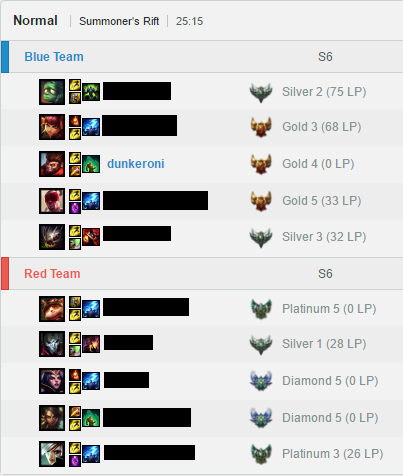
I got the clearest ideas of my strengths and weaknesses when I played with my high elo friends, which got me high elo enemies. Jungle threat at higher levels is exponentially greater and more important than at lower levels. In low level games, I could often get a double kill when someone ganked, or at the very least, escape easily. At higher levels, I got wrecked by ganks whenever I overextended, even with ward coverage sometimes, since they used different paths. I also got a much more "real" idea of my champion's strengths, target prioritization and how team comps actually affect play. At lower levels, people like to talk about the comps much more, even though it often doesn't even matter there.