One of the main themes in the lore is challenging your preconception of what a god is. It's probably the most ubiquitous theme if you had to select a core theme of the League Universe. The fact that you have this question means you're reading between the lines.
The writers frequently present us with godlike figures and then peel back the layers of their character and show us their weaknesses and some of their pettier motivations that betray them as human-like entities and less like the traditional ideal gods portrayed in our world. The only reason most champions who can be called gods are referred to as such, is because so called "lesser beings" say that they are. It's just a matter of scaling and perception.
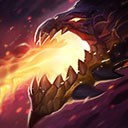
The Ascended are imbued with godlike powers, but their minds are full of mortal pitfalls. Azir suffers from pride, Xerath spite, Nasus hopelessness, Renekton insanity. The Darkin are much the same. Aatrox especially deep dives on it with his self-loathing and desperation. They only changed their bodies form but they are still very human where it counts. Not gods.
The Freljordian deities are referred to as Demi-gods and revered by certain tribes in the Freljord, but in reality they are all just powerful spirits. Ornns' tales are all dubious as hell they simply don't sound like things that actually happened, but rather more like people using gods to explain the occurrences of the natural world that they can't themselves. Ornn and Volibears' sibling rivalry, Ornns affection for his followers and his melancholy after their deaths. All more classic examples of Riot portraying gods behaving like humans to make you question their legitimacy. Not gods.
Lately we've been peeling back a bit on the Celestials too. These are beings who actually reside in the heavens. They manipulate events on Runeterra to suit their purposes. They can merge with mortals or control them entirely to enact their will. They embody abstract concepts that cease to exist when they do. They sound like classic interpretations of gods to us. Now with Pantheon we know that these abilities aren't hallmarks of their strength but rather glaring weaknesses. They don't control Aspects because they can they do it because they MUST. They need a go between since they can't physically exist on Runeterra themselves. Even the World Runes themselves are tools created by otherworldly beings so that they can craft the physical world. Because they couldn't create reality directly. And what happened when Pantheon assumed direct control of Atreus and went up against Aatrox? He died, the literal antithesis of godlyhood. Godhood as a concept is that we die... they don't. But while Pantheon did Atreus survived... and then Atreus KILLED AATROX HIMSELF AND ASSUMED PANTHEONS' MANTLE. Now he fights against all manner of "godlike" entities while championing the power of man. This is the most direct allegory challenging the concept of godly hood and omnipotence we have seen yet in the lore.
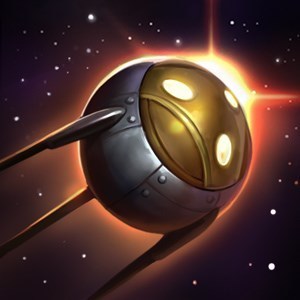
Aurelion Sol creates stars. Creation is a hallmark of godliness. Yet he's prideful and that pride led to his own downfall. He is now a "god" that lacks autonomy, which is laughably ironic and is by design. To make you second guess him. We also know that although he is old as hell, he isn't immortal he can die or be destroyed.
Kayle is the reverse trope a human who wants to be perceived as a god. She sees mortals as needing guidance and naturally self-destructive and she tries to annihilate her emotions and personality to differentiate herself from us. It's clear she struggles though, she felt guilt towards her fathers death, rage at Ronas' death, and she has conflicted emotions towards Morgana. You're not really supposed to think "oh is Kayle a god" she obviously isn't (she's not even a legit Aspect) but watching the same god complex quandary, but in reverse provides context for the other "gods". The properties of godliness she is imposing on herself are the same that are happening with all the other godlike entities. Here it's more pronounced and obviously forced to make us see how silly pushing for godhood is. Her righteousness, stoicism and lofty purpose cannot cover up her humanity.
The Watchers are other candidates for godlike entities. They come from a world of nothingness and are the biggest threat to Runeterra, the endgame. Their motivations are actually innocuous in a sense. Rather than for domination or because they are mortal enemies with the denizens of Runeterra, the Watchers want to destroy reality only because they don't understand it. It disorients them, it's antithetical to their very nature, and for this reason it must go. They even seem to harbor a childlike fear of reality. Their simple motivations lack the complexity of a true deities' "divine plan" and they react more like animals, blindly obeying instinct or like frightened children who cower from what they can't comprehend. Also just like the Celestials they cannot directly cross over to Runeterra. Last time it ended disastrously with Lissandra freezing them within the Howling Abyss, so they now use Voidborn to do their bidding. In-game Voidborn champs still have their unique personalities and sentience, but in the lore seem to be less than rudimentary beasts or drones. Not even sentient, made up of inorganic material and lacking in their own motivations. These crude mockeries of life are likely the best the Watchers could do to mimic life on Runeterra, because they lack contextual understanding of what life is. They aren't omniscient like a stereotypical god would be.
Kindred relies heavily on mystery to work as a godly entity. We know that all things must die and eventually they will all meet the Lamb and the Wolf. We don't know if Kindred exists BECAUSE of the cycle of life and death or if they created it. Cause or Effect? Kindred works on another level because for me at least I find it refreshing that their power scaling isn't based on might like the other gods. They can't face off against an army like Ascended or scorch the terrain of Runeterra like Aurelion with celestial fire. No, their power comes from them inserting themselves into the natural cycle. Associating with something you can't fight, can't run from, can't resist: mortality. What makes me skeptical for now at least for me is the aforementioned nature of Kindreds' relationship with death. Are they actual death incarnate or merely a messenger of something that would come regardless?
Which brings us to the final one. The entity that seems less god and more immutable law of the universe: Nagakaborous. We know next to nothing about Naga. Like Kindred the mystery shrouding the beings sometimes makes it seem larger than life. I do believe Riot will continue this examination with Naga in due time. In my personal interpretation is see a lot of parallels between Illaoi and Nagabourous and the Jedi and The Force. A religious sect assigning their own meaning to a property of the universe that doesn't recognize them as worshippers. Like a cult that worships time or gravity, the Jedi are guilty of putting their faith in a concept that either doesn't care about them or isn't even capable of doing so and this misplaced faith lead them to disaster. Wouldn't it be interesting if despite Illaois' beliefs and ability to channel Nagas' power, Nagakaborous wasn't even sentient? It just did what it did because it does. No divine purpose it just IS. That would be a more interesting direction to go in rather than to constantly deconstruct these gods, but then say Naga is the exception: the only real one.... There are no TRUE gods, because a god is a construct that exists in a mortal mind. Gods exist to give meaning to mortal existence because a god is everything a mortal isn't.
I now realize how long this post got with all of the examples. I definitely have to clean it up and make it it's own thread when I get back home. It's a topic that not to many people talk about, what makes a god a god beyond simply power scaling? Yet the game is so chock full of it that it may just be the core theme of League of Legends at this point.
 ,
,  and the god of
  are the two confirmed gods in the universe that we know about. Everything else is just a powerful being that happens to exist and does things for reasons.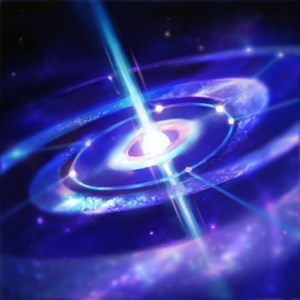


 is a god.