The 3 skill dimensions in League

When trying to improve your gameplay, there's really three different aspects that you can work on. I wrote a blog post at tahalden.blogspot.com on 'the three skill dimensions' in League of Legends, and posted it below as well. I hope you like it!
In the previous blog post, I discussed the three skill dimensions for mastery in League of Legends: the micro-level, the macro-level and, in general terms, game knowledge. Because they are relevant in every discussion concerning the game design of League, I will define these three dimensions before continuing with the next design values.
For the sake of keeping in line with the current real-life meta (2014 FIFA World Cup), I will draw an analogy with football (a.k.a. soccer, across the pond). I have not randomly chosen this particular analogy, though. There are a lot of parallels to be drawn between the the League of Legends e-sports scene and the professional sports scene such as for football.
**1. The micro-level: **
Essentially, the micro-level is about a player’s mechanics throughout the different stages of the game. How good are you at last-hitting minions in lane during the early-game? What are your skills in terms of ganking your lanes from the jungle? How well can you execute ability combinations? How do you fare during team fights in terms of positioning depending on your role in the team? To put it differently, micro-level skills do not concern any long-term planning. The micro-level dimension includes any event in the game that requires you to act here and now. In a way, the micro-level includes most of the actual action in the game.
When one watches a football match, it’s the flashy plays we’re looking for, analogous to the micro-level in League of Legends. Do you recognize any of the following epic plays? I sure don’t. I suck at football, and I’m even worse at watching it.
https://www.youtube.com/watch?feature=player_embedded&v=Rueyy_aDzTo
2. The macro-level:
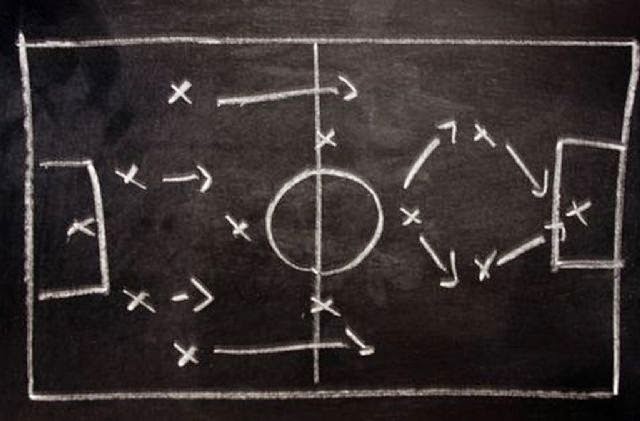
Any given event usually leads to another. In a way, this is League’s expression of ‘cause and effect’. The macro-level concerns this succession of events that, ideally, leads to reaching the eventual goal of a game of League: destroying the opposing team’s nexus before they destroy yours. This can be planned for before the game even starts by selecting champions that have good synergy in one way or another and can be used to implement a given strategy. Similarly, football teams will figure out strategies on the blackboard before a match even begins.
The execution of that strategy, however, is always counterbalanced by the strategy of the opposing team. Going into a game with a clear plan does not necessarily mean the enemy will allow you to execute that plan. So the macro-level is not only about planning beforehand, but also about the actual execution. A good dose of improvisation is required to react properly to the moves of the opposing team within the confines of your own strategy. A single action or event is the micro-level. A sequence of an action and then a reaction is the macro-level. Always remember not only the strategy that your team follows, but also the strategy that the opposing team is trying to execute. Be mindful of the consequences of your actions and the fact that no matter how much you plan beforehand, that plan is always counterbalanced by the plans of the enemy.
3. Game knowledge:
The final skill dimension is the actual knowledge of the game. League currently sports 119 unique champions, over 150 unique items, an army of runes, and 3 unique mastery trees. The actual game mechanics on Summoner’s Rift adds another chapter of information one has to absorb to grasp the game fully. The difference between this dimension and the other two? It does not directly lead to a win. However, it sure does contribute to both the micro- and the macro-level. Comparing this to football, knowing the overly complicated concept of offside and all its caveats (nope, I don’t play football, obviously — but let’s be fair, the concept has [a whole Wikipedia page](http://en.wikipedia.org/wiki/Offside_(association_football) dedicated to it!) contributes to your gameplay (micro) and strategic planning (macro). Only the application of that knowledge, though, can net you a goal.
Your game knowledge contributes to your micro-level play. Knowing exactly what abilities a specific champion has, or even how much damage an opposing champion’s ability does, can mean the difference between a successful all-in maneuver or an instant trip back to the fountain. Similarly, that knowledge contributes to your macro-level play. When during champion select you see the opposing team forming a poke-heavy siege composition, it may be wise for your team to form a heavy-engage/heavy-dive composition such that you don’t give the opposing team the chance to poke you down during the course of the game.
Here's a schematic overview of the three skill dimensions.
**So what does all this mean? **
With the final goal of destroying the opposing team’s nexus, both your skill on the micro-level and the macro-level can directly contribute to a win. You greatly enhance your skill on both levels by increasing your game knowledge. Going back to the discussion on the design value of Mastery in the previous blog post, you can improve your gameplay by working on either one of the three levels. To truly master the game, though, all three are important.
And this mastery goes deep. Even the best of the best still have areas to improve. The recent uprise of the 4v0 fast push in the professional scene is a great example. In the 4v0 fast push a team swaps their marksman/support duo to the top lane and freezes the lane until the arrival of the third minion wave, which contains a cannon minion. With that wave they then push forward to the turret and kill it with the help of the top laner and the jungler (micro-level). Of course, the opposing team can perform a similar tactic in the bot lane and take down the turret there. Hence, you have to balance your own aggression with the defense of your (either first- or second-tier) bot turret. If executed well, this can lead to a significant early-game advantage over the opposing team (macro-level). In the professional scene, sometimes the advantage gained this way was huge (e.g. one team would take down the inhibitor in their fast-pushing lane, while the opposing team had barely taken down the second-tier turret). This strategy also showcases how micro-level play can influence the macro-level play. How well you execute the fast push (micro-level) determines whether you you gain an advantage over the opposing team or not (macro-level). However, without having the game knowledge for this strategy, you are less likely to succeed. For instance, you want to know which champions excel at pushing down a turret fast, and how minion control works in the early-game.
TL;DR: Micro-level and macro-level play both contribute to winning a game of League, and your game knowledge can greatly enhance both levels. Moreover, there is a intricate interaction between micro-level and macro-level play. Which will you choose to improve your skill first?