A Nuanced Look at Dragons, Randomness, and Competitiveness
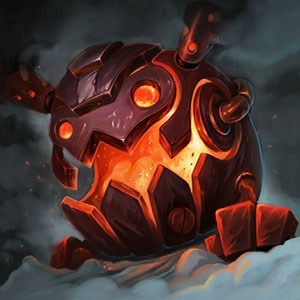
There have been a number of comments critiquing the change to the random dragon spawning. For those unaware, in patch 6.9, every time a dragon spawns, it will randomly be a fire, air, water, or earth dragon each granting a different bonus to the team. I want to go over a bit about the nature of random and what place it can serve in a competitive game, both good and bad.
#Why not Just Give Gold Again?
As someone who primarily plays an objective controller, I can tell firsthand that team gold is not an appreciable stat, even though it is an extremely strong stat. Despite its strength, the sheer value given is just so difficult to appreciate because of how spread out the effect is. Back in Season 3, it was not uncommon to have grabbed six dragons yet the team feeling like nothing meaningful had happened, despite this being in excess of 4,500 gold.
Note that just because an effect is extremely strong doesn't mean it feels strong. This is why several auras (Fiddles, Sona, Taric) have been extremely tuned or even removed, even though aura effects could easily be giving in excess of 1,500 gold worth of stats for a teamfight. The issue is not one of strength, but allowing a player to appreciate that strength.
Consider too that Rift Herald gives 250 team gold when it's killed, but you don't exactly see it as a super amazing point of team contention. This is almost as much gold as the previous dragons used to give.
REDACTED. My memory was wrong; the dragon gave far more than that.
The other issue, and one that Riot has more specifically alluded to, is that when two objectives grant the same thing, tradeoffs feel unimpactful. Trading a tower for a dragon used to feel like a zero sum game with no particular change for either team. At that point, the dragon may as well have not existed at all.
The current Dragon system was trying to make the tradeoff meaningful, and it is a success compared to the previous season, but it's not good enough. The concerns about competitive play revolving too heavily around lane swaps shows that trading dragon for towers still feels too zero-sum. Yet, if you simply increase the strength of every dragon, snowballing becomes a significant concern.
The question then becomes: how do you make the tradeoff between a dragon and a tower meaningful without giving too much power to snowballing compositions? Riot has decided to address this with random dragons. Is this good? bad? Let's discuss.
#What Makes Random Problematic? What Makes it Good?
There are many critiques about competitive games having random elements. The biggest critique is that competitive games should not have random elements. But that answer is insufficient; why shouldn't competitive games have random elements? To simply say "Because it decreases competitiveness" is a redundant answer that tells us nothing, so we must dig further. By exploring this question, a number of points emerge.
Random is unfair because it provides one team an advantage that they don't have control over. If we're playing Rock Paper Scissors, and I get Dynamite every tenth time, that feels unfair because there is nothing the other player can do except 'git gud'.
Random is unskillful because it allows a path to victory that didn't require mechanical or strategic thought. You'll see this all the time on Hearthstone if you're familiar with esports, where losses often feel attributed to RNGesus rather than clever planning.
Random is inconsistent because it makes it difficult to plan a strategy. The update to Brand helps address a lot of the lottery involved with Pyroclasm, but until recently, whether it obliterated a teammate often just came down to how lucky they were.
This isn't all the concerns about random, but it's a large chunk of them. But there are a lot of good things about Random too!
Random promotes adaptation because it prevents all games from being decided wholly based on things set up before a game. Fundamentally, this is what makes card games interesting. Imagine if Magic allowed players to pre-sort their drawing order when playing; the meta would revolve around a more macro-level play about setting up the perfect deck orders in advance. Strategic? Probably. Fun to watch? Probably not as much.
Random prevents monotony because it allows games to play out differently each time. Imagine how boring games like Bejeweled would be if the order of the gems was the same each time. There's probably a speed-running market for that, but it would get monotonous pretty fast.
Random displays quick thinking because working with random elements often requires split-second evaluations. Being chased down a river in Dota 2 right as a River Rune spawns and grabbing the Invisibility Rune to turn around on the attacker and kill them feels pretty cool for the killer, and a ton of fun to watch too (even if the chaser feels salty). Note that I don't really like the River Rune system for reasons that will be clear soon, but there's no denying that randomness can reward being quick on your feet.
#Are there Good Randoms?
So our next question should be: are there ways to make Random maximize its good while minimizing its bad? This leads us to discussing aspects of Random.
##Good Random has Equal Distribution for Players
Good Random attempts to be fair by allowing all players the same chance of accessing the random element. Me getting dynamite every tenth rock-paper-scissors isn't nearly as unfair if you have the same chance of getting it as well. If we're playing Munchkins and drawing from the same deck, there's nothing strictly unfair about me getting a Loaded Die card and messing up your plans (Screw you, Luis).
But just because something is fair, doesn't mean it feels fair. It will still feel unfair when I land Dynamite regardless of whether you have the same chance or not. This leads to our next point:
##Good Random Does Not Have Too High or Too Low Variance
Variance refers to how extreme the difference is between potential options. If there was a dragon that spawned that had the effect of "You Win the Game" by killing it, it wouldn't matter that both teams could take the dragon; it would simply not feel very fair due to how extreme it is compared to all the other dragons. This is because high variance feels unfair even if it technically is fair.
The larger the variance, the more unfair a random element feels. But lower variance isn't truly ideal either. If each dragon provided the exact same benefit, but gave a permanent +1 bonus to some random stat between AP, AD, AS, and CDR, it would feel like a fairly insignificant random element. This random element would pretty much just be needlessly complicating the game without adding anything meaningful.
A balance must be struck between these two extremes. The variance of the possibilities must be low enough to feel fair, but high enough to be meaningful. That last word there is meaningful, both semantically and for our next point.
##Good Random Promotes Adaptation
Part of what makes high variance feel so terrible is that it feels like there was nothing that could have been done. There's usually no choice that could have been made to stop the random element from completely screwing everything up. There's a few things that can make it feel this way.
If something is not telegraphed, it's extremely difficult to adapt play around it. Going back to Brand's Pyroclasm, we see that in the past, there was an extremely small window between when it hit and when it looked like it was going to switch targets. The telegraph window was simply too small to play around.
Similarly, Blitzcrank's passive thunder from their ultimate and Kennen's random champion targeting during Maelstrom don't feel like they can be played around because they just sort of happen. Luck is still involved but it doesn't feel like it can be meaningfully outplayed outside of outpraying.
This is also one of the big concerns with the existence of Critical Chance. While crits allow laning phases to have some variance to avoid being the same each time a particular matchup happens, it still feels really bad to get killed by a lucky crit both because the variance is so high and because the window of avoiding the outcome was basically zero.
Compare this to Starcraft 2, where each player starts off in a random base. Because the location of the enemy is different each time, it incentivices different strategies. What happens if you find the opponent earlier? Did you arrive in time to discover a wall being built or are they going with an early expand because the map is bigger and they won't be discovered as quickly? Would it be risky to focus on pumping out voidlings before knowing their exact location? Am I mixing up my games? Here we see an example of random fostering adaptation.
#Conclusions
With all this, we can discuss whether the extent of dragon randomness is too much.
The dragons are accessible by both sides, helping provide fairness. As many other commentators have noted, each dragon serves as both an extreme benefit but also extreme detriment to the same composition.
The Aqua Dragon's regeneration helps poke compositions with sieging, but if the other team gets it, makes it difficult to siege past the regeneration.
The Air Dragon's out of combat MS benefits rotating compositions, but makes it much harder to out rotate enemies that have gotten the Air Dragon instead.
The Earth Dragon's objective damage enhancer benefits diving compositions, but makes it much harder if enemies use that same buff to grab other objectives faster (baron).
The Fire Dragon. Yeah.
This means the relative benefit the dragon provides will be roughly the same for each team, so the impact it provides is more fair.
Additionally, concerns about dragons leading to less skill and more reliance on luck are likely ill founded. Because each dragon is heavily telegraphed (you know which dragon is spawning next), there is plenty of time to adapt play around it and make meaningful strategic tradeoffs. If dragons still feel too luck-based and players feel it's too inconsistent to play around, Riot can use this telegraphing as a balancing lever by increasing the window of knowledge (maybe even to champion select).
How big is the variance between each choice? This is perhaps the area where there will be the most disagreement. I personally feel the variance seems to be in an alright spot, but others may see the variance as being too large, and this is largely what determines whether it feels fair or not for most people.
So ultimately, randomness does not necessarily mean less skillful or less competitive. With enough telegraphing and variance tuning, random can be made to promote skill and adaptation rather than remove it, but it must be done carefully.
I hope you will have found this useful, or at the very least, help to clarify the discussions going forward about the dragons.