[Diamond Design] Did You Think About His Power Level?

Wow, two discussions within 2 weeks? I’m on a roll! Luckily (or unluckily) for all of you, Gbay99 put up a really interesting video a couple of days ago, and it gave me some inspiration to write about that topic somewhat.
Also I’m now allowed to publicly talk about this event, Press Start: Irvine 2015. I should hopefully be there helping out, but since I know I’m not important enough for anyone to just come see me, if anyone is from SoCal or is willing to travel, it should be a pretty fantastic event put on by the local collegiate scene. Tell your friends, still got over a month to get plans going! Also several thousand dollars in tournament prizes (whaaaaa?)
Obligatory patch notes comment: actually overall pretty happy with where the meta is at right now. I wish we were in a more offensive oriented meta like we just were, and not moving into a more defensive oriented one, but that’s personal preference really.
Be sure to go check out our previous discussion and go take a look at everything else over in the Central Hub. Lots of cool discussions (this is number 8) for you to look at. Hopefully we’ll get honored with a Riot post sometime soon? Rito pls.
Finally, same disclaimer that you’ll see before every article from here on out. I am not the be-all end-all prophet of design and balance. What I say could very well be wrong in its entirety, but I think there’s something important behind the topic I’m discussing that makes it worth adding to the discourse for. If you disagree, say so! Just be respectful about it please.
Cool, onto today’s discussion!
#Did You Think About His Power Level?
http://i671.photobucket.com/albums/vv78/Sinsei55/DatPowerLevel.jpg
Like I said above, Gbay99 posted a video about his favorite League of Legends mechanic, the leveling system. This is something I’ve read very little about other than in champion guides, so today we’ll be talking more about this system and how it relates to champion design. Also sorry for the clickbait title, it had to be done.
First though, just to echo a few things Gbay said, leveling in League of Legends is interesting because unlike in many other games where the level is somewhat artificial, or is simply somewhat of a ratio of your power to the environment you’re playing against, League’s leveling system is directly in opposition to other players, and your level can have a significant impact on how you’re playing the game.
I should of course clarify at this point that I’ll be speaking specifically about champion level, the 1-18 stuff you have in each and every game of League of Legends. The out of game 1-30 leveling experience is something we won’t be discussing much here, including the runes and masteries system that goes along with that. That’s a topic for an entirely different discussion, and one I’ll honestly probably never write about because it’s so far out of anything I’d consider my personal expertise.
#Power Curve
This is the primary concept around which this topic is based off of. Champions have a number of different power curves based on how their abilities work and interact with other aspects of the game. There are five basic power curves that the vast majority of champions adhere to, which roughly follow the chart below from Ryzeonline.com.
http://ryzeonline.com/wp-content/uploads/league-of-legends-champion_power_curves.png
While the information there is somewhat outdated (or wrong depending on opinion/when you read this article), it still illustrates the four basic curves fairly well.
The Plateau
These are gonna be named after geography because I’m boring that way. The first one is simply a flat power curve, a little above the “average” power level of the game. This is illustrated by the green line above. These champions are pretty much equally powerful throughout the game, and have strong early-mid games, but can be overshadowed but late game powerhouses.
Examples: Blitzcrank, Gnar, Caitlyn, Rek’sai
The Mountain
The kinda salmon color I guess? Kinda pink? Whatever. You know which one I’m talking about.
This is where ‘hypercarries’ belong, and anyone who just gets stronger and stronger the game goes, often until they’re basically single-handedly winning the game. This tends to be because they have strong scaling on their abilities, strong synergy between their abilities and items, or because they have a means by which to infinitely scale. They tend to be pretty weak in the early game (or should be, looking at you Kassadin >_>) but nothing is stronger than them in the late game.
Examples: Kog’maw, Karthus, Jax, Azir.
The Cliff
The orange one.
This is basically the opposite of the mountain. These characters are really strong early in the game, but fall off the later the game goes, and hard. While they can be oppressive to play against at the beginning of the game, this is the champion that you tell your team “don’t surrender, we outscale.”
Examples: Pantheon, Renekton, Shaco, Garen.
The Valley
The purple one.
This one is a little unusual, but champions in this section have very important power levels in the early game, fall off in the mid game, and then get really strong again in the late game. A little uncommon, but these champions often pair some of the best qualities of “mountain” champions while sometimes being able to skip their midgame dip due to their early strength.
Examples: Tristana, Caitlyn, Yasuo, Ezreal.
The Hill
This one isn’t on the graphic, but it’s basically the inverse of the valley. These champions tend to have a much stronger midgame than either early game or late game. While they tend to have a power curve that is much higher on one end than the other (eg, awful early game, strong mid game, and then ok late game or vice versa), they all benefit from having a very strong midgame.
Examples: Rengar, Corki, Jayce, Nocturne.
#Where Does the Curve Come From?
Alright, now that we’ve got that out of the way, we’ll take a look at how these power curves actually manifest, and some causes of them. Obviously, this discussion will not be a complete discussion, as some topics we won’t be covering that affect the curve include interactions with other champions, item builds, and whatever kind of meta you’re currently playing in. However, there are some key factors of champion levels that significantly play into this concept.
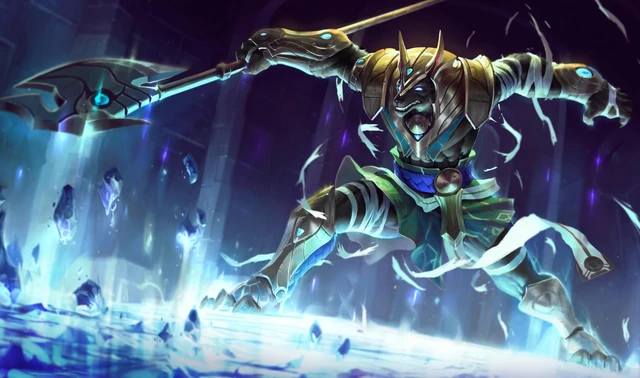
http://img2.wikia.nocookie.net/__cb20131121143336/leagueoflegends/images/thumb/8/86/Nasus_OriginalSkin.jpg/640px-Nasus_OriginalSkin.jpg ”I bring death”
Base Stats and Scaling
The first one is a champions base stats. Obviously, ADCs have some of the lowest base stats of all characters in the game. They are meant to be relatively squishy while putting out high levels of damage, but other champions have particularly high or low base stats.
For example, Gangplank has the highest base health in the game (631.08), and Heimerdinger has the lowest (476). Orianna has the lowest base AD (40.368) while Maokai has the highest (63.544) (these are possibly not up to date, stolen from here) These values can all be converted to gold values, generally based around the cheapest item that is purely one stat. Some examples of this include:
- AD is valued at 36 gold per AD, derived from Long Sword (10 AD for 360 gold)
- Health is valued at 2.67 gold per HP, derived from Ruby Crystal (150 HP for 400 gold)
- AP is valued at 21.75 gold per AP, derived from Amplifying Tome (20 AP for 435 gold)
League of Legends can, in a very simplified sense, be viewed as balls of gold interacting. While very oversimplified and this can’t properly quantify a number of abilities, item effects, and other interactions, it is still useful to have some idea of how an individual champion’s power might work over the game.
Looking at Ahri, her base worth in gold is 9322.98 (excluding attack speed due to the difficulty in quantifying base attack speed value). Every level, she earns 559.92 gold worth of stats (including attack speed).
While horribly out of date, this spreadsheet is still useful for having an idea of how much gold a level is worth. Based on this, it seems that the average gold gain per level is somewhere in the 500-700 range.
As we can see, small changes in a champions base stats or stat gains from levels can have really large impacts later in the game due to how it will shift their raw amount of gold simply available to them. This is one way that levels can affect the power curve.
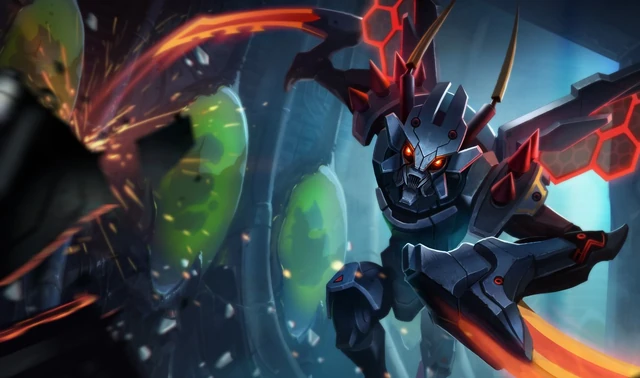
http://img2.wikia.nocookie.net/__cb20120926051834/leagueoflegends/images/thumb/2/27/Kha%27Zix_MechaSkin.jpg/640px-Kha%27Zix_MechaSkin.jpg ”Change… is… good…”
Ability Power Spikes
The second important way that levels affect a champion’s power curve is access to abilities, and this is much harder to simply attribute to basic gold values.
Generally speaking, most champions have power spikes at some, or all of the following level limits.
- 2 (access to second ability) (Jarvan IV)
- 3 (access to third ability) (Zyra)
- 6 (access to ultimate) (Kennen)
- 9 (first skill is fully ranked) (Vladimir)
- 11 (level 2 ultimate) (Kha’zix)
- 13 (second skill fully ranked) (Syndra)
- 16 (level 3 ultimate) (Karthus)
The most impactful level threshholds are probably the ones that take place most firmly in the midgame, at 6, 9, 11, and 13. Most champions have very impactful ultimates (thus why they’re called ultimates) and they generally significantly define a champion’s playstyle for the rest of the game. Levels 6 and 11 are therefore important points to hit because of how much extra power they give to the champion that they didn’t have at the previous level. Levels 9 and 13 are significant not necessarily because they significantly increase a champions power, but because it can reasonably be expected that the champion will not become more powerful for a decent amount of time.
The amount of power a champion gets at these spikes is therefore very important. A character like Corki, who has strong basic abilities, won’t necessarily become too much more powerful from getting access to level 6. Meanwhile, champions like Orianna, with game changing ultimates, are much more impacted by hitting level 6 and 11. There are also champions like Jayce and Udyr, who don’t have ultimates and might not even have abilities worth leveling at those benchmarks.
Some important ability archetypes worth keeping in mind are the “one-point wonders” like Caitlyn’s traps or Janna’s tornado that are so unaffected by increased levels in the ability that beyond having access to the ability, that you simply max them last.
Others include skill combos, like Jarvan and Jayce’s E/Q’s. First, their natural importance doesn’t become available until both are skilled (level 2), but for many combos, their power isn’t fully realized until both are fully skilled. The interactions these abilities have is therefore important to keep in mind when looking at a champion’s power curve.
Experience
This serves as more of something that didn’t have a great place to talk about earlier in the article, but the experience different objectives give therefore have a large, invisible effect on champion balance. Champions with strong early game would really enjoy a decrease to the amount of experience minions give, since they get to enjoy their relative power spikes longer. The opposite is true of late game champions.
Junglers really appreciated the fact that going buff to camp to buff would give you level 3, and many would use the power spike they had to gank top lane, which tended to only be level 2 at the time.
Due to the significant impact this resource has on gameplay, as a tip, pay attention to how close you are to your level ups and abuse when you’re a higher level than your opponent, you have ~600 extra gold in stats on them as well as access to stronger abilities and this can have a huge effect on how the lane matchup is operating.
#Conclusions
When designing a champion, it’s important to think about how they interact with levels, and this usually is based on how your champion’s power curve works. What geographical feature do you want your character to be like? Make sure that the scalings of the ability reflect that, higher base damages and lower scalings make your champion stronger in the early game, while the opposite makes them stronger in the late game. Make sure you also pay attention to how your champion’s stats match up with other similar champions as well, high base stats are again better for early game champions, while high stats earned with level complement later game champions and tanks.
Well hope you guys enjoyed. A lot more proud of this one than I was of the last one as of posting, hopefully you guys agree. Let me know how I did and what you want to see in future posts! Also go bait those Rioters to post in here.
If you have something you want me to talk about, please let me know, or link me to a discussion in progress.
Oh yeah, someone suggested that I post these on reddit. I don’t really use that site much, I lurk too much. If someone else ever does it I’ll be sure to pop my head in though!
Lastly, I feel like I haven't actually wrote about anything I've put in the polls. I should probably do that. Hmmm...
Thanks guys, see you next time!

 's ultimate? Do you value all of a stunned enemy's gold for the duration of the crowd control and add damage? Kind of curious to map this out for a few of my main champs.

 DOWN KITTY! BAD KITTY!




 . Just 2 levels is about the value of a
  . But the results and placements on the spreadsheet clearly are not definitive, and they do not include skills.

 shows up absolutely no where on that chart. lol