4.14 - The World Championship Patch
Riot·9/18/2014, 12:16:21 AM·0 votes·19,547 views
After a year of patches that radically altered League of Legends, the 2014 World Championship will be played on Patch 4.14. There have been multiple tournaments that have already competed on this patch, and there is plenty to glean from those games. Some of the biggest changes come from shifting champion priorities, as well as enhancing certain compositions.
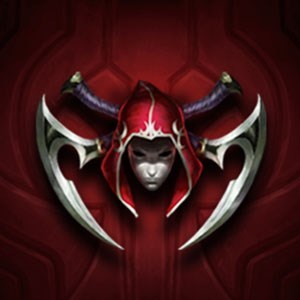
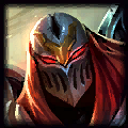
 The most obvious champion that made a return in patch 4.14 was Zed, the Master of Shadows. Thanks to a pair of small tweaks to his Death Mark ultimate ability, he made a return to the Rift after a lengthy absence. Both NaJin White Shield’s Yu “Ggoong” Byeong-jun and Cloud9’s Hai “Hai” Lam had dominant games on the champion during their respective Regionals, and a glimpse over recent high level solo queue activity shows a definitive uptake in the amount of play that Zed is seeing.
Goodbye, Sweet Void Walker
The most obvious champion that made a return in patch 4.14 was Zed, the Master of Shadows. Thanks to a pair of small tweaks to his Death Mark ultimate ability, he made a return to the Rift after a lengthy absence. Both NaJin White Shield’s Yu “Ggoong” Byeong-jun and Cloud9’s Hai “Hai” Lam had dominant games on the champion during their respective Regionals, and a glimpse over recent high level solo queue activity shows a definitive uptake in the amount of play that Zed is seeing.
Goodbye, Sweet Void Walker
 After being a nearly universal ban for the 2014 season, Kassadin received a change to his Riftwalk ability that finally pulled him out of his perpetual limbo since the change inhibited some of his previously unmatched mobility in the middle and late game. A strong counter pick has even emerged in Talon, the Blade’s Shadow.
Maokai Change Opens up Top Lane
After being a nearly universal ban for the 2014 season, Kassadin received a change to his Riftwalk ability that finally pulled him out of his perpetual limbo since the change inhibited some of his previously unmatched mobility in the middle and late game. A strong counter pick has even emerged in Talon, the Blade’s Shadow.
Maokai Change Opens up Top Lane
 Following a pivot on Maokai’s core identity in Patch 4.11, the Twisted Treant was one of the most highly contested picks on Summoner’s Rift. He had a vicious combination of crowd control and engage tools that coupled with his ultimate, Vengeful Maelstrom, to make Maokai the premier top laner for any composition that relied on team-fighting for victory.
Patch 4.14’s change to his Vengeful Maelstrom did not remove Maokai from top lane consideration, but did change some of Maokai’s priority. Instead of a forced ban on red side, or a likely first pick on blue side, Maokai now exists in the same pool of powerful top lane champions as other tanks such as Alistar and Dr. Mundo, as well as mages like Lulu and Ryze.
Following a pivot on Maokai’s core identity in Patch 4.11, the Twisted Treant was one of the most highly contested picks on Summoner’s Rift. He had a vicious combination of crowd control and engage tools that coupled with his ultimate, Vengeful Maelstrom, to make Maokai the premier top laner for any composition that relied on team-fighting for victory.
Patch 4.14’s change to his Vengeful Maelstrom did not remove Maokai from top lane consideration, but did change some of Maokai’s priority. Instead of a forced ban on red side, or a likely first pick on blue side, Maokai now exists in the same pool of powerful top lane champions as other tanks such as Alistar and Dr. Mundo, as well as mages like Lulu and Ryze.
 The primary way that split pushing works is that it forces the opposition to counter one champion with at least two, or a significant number of wards to take advantage of the split pusher’s movements. Zed works as a split pusher because of his dueling potential. There are few, if any, champions that can survive a Death Mark without some sort of crowd control ability. The damage is simply too high.
Once Zed hits that point where he can outfight any other champion 1v1, the game turns into a delicate game of Russian Roulette. If an enemy team tries to push, and Zed will destroy an objective in a hurry. If the enemy team tries to fall back and kill Zed, all of his Living Shadows as well as Flash make him a slippery champion to lock down.
That strategic bind is what makes a Zed-empowered split push so hazardous, and will earn the Master of Shadows numerous bans throughout the course of the 2014 World Championship.
The primary way that split pushing works is that it forces the opposition to counter one champion with at least two, or a significant number of wards to take advantage of the split pusher’s movements. Zed works as a split pusher because of his dueling potential. There are few, if any, champions that can survive a Death Mark without some sort of crowd control ability. The damage is simply too high.
Once Zed hits that point where he can outfight any other champion 1v1, the game turns into a delicate game of Russian Roulette. If an enemy team tries to push, and Zed will destroy an objective in a hurry. If the enemy team tries to fall back and kill Zed, all of his Living Shadows as well as Flash make him a slippery champion to lock down.
That strategic bind is what makes a Zed-empowered split push so hazardous, and will earn the Master of Shadows numerous bans throughout the course of the 2014 World Championship.
Champions
There have been numerous champion priority changes on patch 4.14. The patch was far-reaching enough to where it didn’t just bring up one or two champions, but actually cracked open a Pandora’s box of possibilities. For the first time in over a year, there isn’t a mage or assassin dominated middle lane. Similarly, the top lane isn’t just tanks or utility mages. In either case, the number of viable champions is as high as its been in many months. The Unseen Blade is Back
The most obvious champion that made a return in patch 4.14 was Zed, the Master of Shadows. Thanks to a pair of small tweaks to his Death Mark ultimate ability, he made a return to the Rift after a lengthy absence. Both NaJin White Shield’s Yu “Ggoong” Byeong-jun and Cloud9’s Hai “Hai” Lam had dominant games on the champion during their respective Regionals, and a glimpse over recent high level solo queue activity shows a definitive uptake in the amount of play that Zed is seeing.
Goodbye, Sweet Void Walker
After being a nearly universal ban for the 2014 season, Kassadin received a change to his Riftwalk ability that finally pulled him out of his perpetual limbo since the change inhibited some of his previously unmatched mobility in the middle and late game. A strong counter pick has even emerged in Talon, the Blade’s Shadow.
Maokai Change Opens up Top Lane
Following a pivot on Maokai’s core identity in Patch 4.11, the Twisted Treant was one of the most highly contested picks on Summoner’s Rift. He had a vicious combination of crowd control and engage tools that coupled with his ultimate, Vengeful Maelstrom, to make Maokai the premier top laner for any composition that relied on team-fighting for victory.
Patch 4.14’s change to his Vengeful Maelstrom did not remove Maokai from top lane consideration, but did change some of Maokai’s priority. Instead of a forced ban on red side, or a likely first pick on blue side, Maokai now exists in the same pool of powerful top lane champions as other tanks such as Alistar and Dr. Mundo, as well as mages like Lulu and Ryze.
Compositions in 4.14
All of these new champions have added compositional flexibility all over the world. Protect the AD Carry has been newly empowered thanks to Maokai no longer having complete hegemony over the top lane, as well as the rise of Nunu. For the now viable assassins, a pick or a split push composition highlights their talent Protect the AD Carry The idea behind a “Protect the AD Carry” composition is simple: surround a hypercarry such as Tristana with a variety of utilities champions such as Lulu, Nunu, Orianna and Zilean, and ride the extraordinary late game damage output of the AD Carry to a victory. It rose back to viability thanks to Maokai’s changes. The tremendous utility that this composition brings can wait out Vengeful Maelstrom though shields, heals, or Zilean’s Chronoshift, and then let the AD Carry go to work. A recent example of a Protect the AD Carry composition is from Counter Logic Gaming in Game 3 of the 2015 Spring Promotion Tournament. They were down 0-2 to Curse Academy, and had to get back into the series. They built a Protect the AD Carry composition around Yiliang “Doublelift” Peng’s Tristana that included hefty shields from Lulu and Orianna, as well as the Unbreakable protection of Braum. CLG played their roles perfectly. Doublelift was kept up through a couple of teamfights and collected 8 kills for his time before the team destroyed the CA Nexus. Scaling Season Three was an era where teams would regularly pull off twenty minute dominating wins. The 2014 season moved away from that tendency, but along the way there were stops at the 2v1/4v0 split push, and the siege composition where teams focused on objectives as opposed to kills. Much like Nunu re-emerging in the jungle, there isn’t a specific 4.14 change that can be pointed to as a hallmark of scaling compositions. It’s simply an amalgamation of metagame movements over the past few months. A scaling composition uses champions that don’t hit their stride until later in the game, and power up through one or two core items. Ryze, both in the top and middle lane, is a perfect example of this idea. He desperately needs a fully stacked Rod of Ages as well as a Seraph’s Embrace to turn into a menace on the Rift. Once he has that power, there are few champions that can rival Ryze’s combination of damage output and tankiness. In order to give time for a champion like Ryze to accrue their key items, the composition generally prefers to play a slower early game where it is willing to give up some objectives such as the Dragon since an early engagement would be disadvantageous. It generally starts to power up around the 20-25 minute mark, or when the primary scaling champions get two or three completed items in their inventory. Team SoloMid used a scaling composition to overcome Cloud9 in game four of their series during the finals of the North American Regionals. The combination of Ryze and Tristana scales as well as any pair of champions in League of Legends today, but in this case, the scaling was accelerated. The rarest way that a scaling composition plays out on the Rift is when one of the main scalers, in TSM’s case top laner Marcus “Dyrus” Hill’s Ryze, scores early kills. In that case, what should be an early power trough is erased, and the champion becomes an unstoppable killing machine far earlier than normal.Split Push
Season three was rife with split pushing, and the 2014 season had its fair share, but the rise of Zed has brought a new flavor to the old idea.
The primary way that split pushing works is that it forces the opposition to counter one champion with at least two, or a significant number of wards to take advantage of the split pusher’s movements. Zed works as a split pusher because of his dueling potential. There are few, if any, champions that can survive a Death Mark without some sort of crowd control ability. The damage is simply too high.
Once Zed hits that point where he can outfight any other champion 1v1, the game turns into a delicate game of Russian Roulette. If an enemy team tries to push, and Zed will destroy an objective in a hurry. If the enemy team tries to fall back and kill Zed, all of his Living Shadows as well as Flash make him a slippery champion to lock down.
That strategic bind is what makes a Zed-empowered split push so hazardous, and will earn the Master of Shadows numerous bans throughout the course of the 2014 World Championship.





 THE DREAM