What's Wrong with ROCCAT
Riot·6/10/2014, 8:15:04 PM·1 votes·1,488 views
After a promising Spring Split, ROCCAT have had a rough sophomore showing. What caused their sudden decline?
ROCCAT handily beat Alliance in the Spring Playoffs, setting up expectations for a successful Summer Split. That hype turned to confusion and dismay when ROCCAT came out of Super Week with a 1-3 performance, a record that has further dropped to 1-7 after Week 3. What went so wrong for these rising stars, and how do they get their shimmer back?
 “If your condition . . . is fear, your performance will suffer,” said Lukas Schenke, SK Gaming’s sports psychologist, “and you’ve got to change that mindset going into the game.”
Schenke’s wisdom holds true, especially when you take a look at that match against SK Gaming. ROCCAT left their fountain with determination in their step, and it showed. They secured the first three kills of the game, led or tied in farm in all five positions, and, most importantly, were making plays, not just reacting to their opponent’s. Around the 20 minute mark, ROCCAT became a tad too aggressive and gave up four kills for nothing. From there, the team unraveled.
Less than five minutes later, ROCCAT lost in another four-kill sweep. When the Copenhagen Wolves moved for Baron, Remiguisz “Overpow” Pusch, ROCCAT’s only surviving member, attempted to poke them down, but wandered too close and was promptly picked off by the Wolves. With a five-on-four advantage, the Copenhagen Wolves sprinted to Dragon. ROCCAT again displayed questionable decision making when they engaged against superior numbers with Baron buff and give up two more kills - and eventually, the game.
ROCCAT’s spiral out of control can be traced back to their weak mental state at the time. As the game began, their confidence was soaring, but that confidence proved fragile. With one mistake, the team’s entire focus went out the window for the remainder of the game. Whether or not an actual sports psychologist is the answer for ROCCAT, they must find a means of improving mentality, and it may need to come from the outside.
“If your condition . . . is fear, your performance will suffer,” said Lukas Schenke, SK Gaming’s sports psychologist, “and you’ve got to change that mindset going into the game.”
Schenke’s wisdom holds true, especially when you take a look at that match against SK Gaming. ROCCAT left their fountain with determination in their step, and it showed. They secured the first three kills of the game, led or tied in farm in all five positions, and, most importantly, were making plays, not just reacting to their opponent’s. Around the 20 minute mark, ROCCAT became a tad too aggressive and gave up four kills for nothing. From there, the team unraveled.
Less than five minutes later, ROCCAT lost in another four-kill sweep. When the Copenhagen Wolves moved for Baron, Remiguisz “Overpow” Pusch, ROCCAT’s only surviving member, attempted to poke them down, but wandered too close and was promptly picked off by the Wolves. With a five-on-four advantage, the Copenhagen Wolves sprinted to Dragon. ROCCAT again displayed questionable decision making when they engaged against superior numbers with Baron buff and give up two more kills - and eventually, the game.
ROCCAT’s spiral out of control can be traced back to their weak mental state at the time. As the game began, their confidence was soaring, but that confidence proved fragile. With one mistake, the team’s entire focus went out the window for the remainder of the game. Whether or not an actual sports psychologist is the answer for ROCCAT, they must find a means of improving mentality, and it may need to come from the outside.
 ”I know how a team works, but I have my limits,” said Alexander Müller, managing director at SK Gaming, when discussing Schenke’s hiring. Müller continued, “[Having a sports psychologist] makes my job very easy when it comes to this, because I don’t have to do this, and I’m not specialized in this.” However competent ROCCAT’s own staff may be, this problem could fall outside their realm of expertise. With the right addition to the staff, team, or elsewhere, ROCCAT could find the hidden chink in their armor. As Müller explained, “[Schenke] was one of the missing parts without us knowing it was missing.”
The Plague Rat
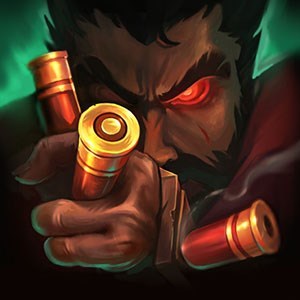
Of the 119 champions to choose from in League of Legends, the one that ROCCAT struggles with most is Twitch. In the first two weeks of the Summer Split, ROCCAT banned out Twitch in all six matches, even when they had first pick. Despite the Plague Rat’s strength at the moment, Celaver clearly doesn’t feel comfortable on the champion. That alone is a lost opportunity for ROCCAT, and the team’s inability to deal with Twitch as a whole only exacerbates the situation.
For example, while Twitch never made a physical appearance in ROCCAT’s first five losses, he certainly played a role. Every time ROCCAT banned out Twitch, it hurt them in Champion Select. For two weeks the team spent one of their bans on a single champion instead of focusing on champions specific to their opponent’s play styles. Surely some teams out there, like ROCCAT themselves, prefer AD carries other than Twitch.
Things changed in Week 3. We saw a new ROCCAT, one who finally felt confident enough to deal with Twitch. ROCCAT chose to not ban Twitch in either of their matches in Week 3. Considering their opponents had first pick in both matches, it was quite the contrast to Weeks 1 and 2.
”I know how a team works, but I have my limits,” said Alexander Müller, managing director at SK Gaming, when discussing Schenke’s hiring. Müller continued, “[Having a sports psychologist] makes my job very easy when it comes to this, because I don’t have to do this, and I’m not specialized in this.” However competent ROCCAT’s own staff may be, this problem could fall outside their realm of expertise. With the right addition to the staff, team, or elsewhere, ROCCAT could find the hidden chink in their armor. As Müller explained, “[Schenke] was one of the missing parts without us knowing it was missing.”
The Plague Rat
Of the 119 champions to choose from in League of Legends, the one that ROCCAT struggles with most is Twitch. In the first two weeks of the Summer Split, ROCCAT banned out Twitch in all six matches, even when they had first pick. Despite the Plague Rat’s strength at the moment, Celaver clearly doesn’t feel comfortable on the champion. That alone is a lost opportunity for ROCCAT, and the team’s inability to deal with Twitch as a whole only exacerbates the situation.
For example, while Twitch never made a physical appearance in ROCCAT’s first five losses, he certainly played a role. Every time ROCCAT banned out Twitch, it hurt them in Champion Select. For two weeks the team spent one of their bans on a single champion instead of focusing on champions specific to their opponent’s play styles. Surely some teams out there, like ROCCAT themselves, prefer AD carries other than Twitch.
Things changed in Week 3. We saw a new ROCCAT, one who finally felt confident enough to deal with Twitch. ROCCAT chose to not ban Twitch in either of their matches in Week 3. Considering their opponents had first pick in both matches, it was quite the contrast to Weeks 1 and 2.
 On Day 1, Alliance passed on Twitch, as did ROCCAT, showing that while they felt ready to deal with the champion, they had no desire to use him for the time being. On Day 2, Fnatic first-picked Twitch, giving ROCCAT their first match against the champion in the Summer Split.
As the game began, ROCCAT showed they indeed had a plan to deal with Twitch by initiating a lane swap, preferring a 2v1 matchup for the AD carries over traditional lanes. Xaxus fared better in his 2v1 matchup than fellow top laner Paul “sOAZ” Boyer, proving ROCCAT had indeed thought their strategy through when they chose to put Xaxus up against Twitch. The fear factor surrounding Twitch really began to evaporate as ROCCAT caught Martin “Rekkles” Larsson out alone on three separate occasions and easily ran him down.
The remainder of the match, however, demonstrated that Twitch remained a problem for ROCCAT. More than once a member of ROCCAT ventured too far forward, not paying enough respect to Twitch’s Ambush, and found themselves in a sudden storm of crossbow bolts. Instead of adapting and tightening the ranks, ROCCAT continued to repeat their mistake of venturing too far apart, a mistake that played a major role in their defeat.
Twitch is not an insta-win champion. No champion is. But ROCCAT struggled with Twitch beyond the laning phase and revealed why they were so afraid of him in the first two weeks of the Summer Split.
Then again, ROCCAT’s struggles with the mid game itself didn’t help either.
On Day 1, Alliance passed on Twitch, as did ROCCAT, showing that while they felt ready to deal with the champion, they had no desire to use him for the time being. On Day 2, Fnatic first-picked Twitch, giving ROCCAT their first match against the champion in the Summer Split.
As the game began, ROCCAT showed they indeed had a plan to deal with Twitch by initiating a lane swap, preferring a 2v1 matchup for the AD carries over traditional lanes. Xaxus fared better in his 2v1 matchup than fellow top laner Paul “sOAZ” Boyer, proving ROCCAT had indeed thought their strategy through when they chose to put Xaxus up against Twitch. The fear factor surrounding Twitch really began to evaporate as ROCCAT caught Martin “Rekkles” Larsson out alone on three separate occasions and easily ran him down.
The remainder of the match, however, demonstrated that Twitch remained a problem for ROCCAT. More than once a member of ROCCAT ventured too far forward, not paying enough respect to Twitch’s Ambush, and found themselves in a sudden storm of crossbow bolts. Instead of adapting and tightening the ranks, ROCCAT continued to repeat their mistake of venturing too far apart, a mistake that played a major role in their defeat.
Twitch is not an insta-win champion. No champion is. But ROCCAT struggled with Twitch beyond the laning phase and revealed why they were so afraid of him in the first two weeks of the Summer Split.
Then again, ROCCAT’s struggles with the mid game itself didn’t help either.
 Outside of their comfort zone, ROCCAT switch to reaction-mode. As that same match against SK progressed, ROCCAT turned stagnant. Their plays became more responsive than anything. True, they had a Kog’Maw to feed and get into late game, but it didn’t feel as though they were “buying time;” it felt like they were on autopilot. This only became more apparent as SK Gaming took down objective after objective almost completely uncontested.
 ROCCAT have essentially bankrupted themselves out of matches. Against SK, Celaver’s Kog’Maw became a non-factor due to severe under-farming. The same happened to Xaxus’ Ryze versus Millenium, another farm-dependent, late-game carry. By the time the Nexus fell, Xaxus trailed Kevin “kev1n” Rubiszewski by 54 CS and more than 4,000 gold.
ROCCAT need to find a means of keeping themselves relevant in the later parts of the game, especially in matches where they pick up farm dependent hyper-carries. Whether this means a stronger focus on Dragon and objectives through improved ward coverage or more attention placed on CS in the laning phase is up for debate and largely situational. Either way, ROCCAT’s fortunes won’t improve until they do something about an in-game fortune first.
Gilean spends most days writing about eSports and occasionally shouting about them. You can follow him @HHGilean
ROCCAT have essentially bankrupted themselves out of matches. Against SK, Celaver’s Kog’Maw became a non-factor due to severe under-farming. The same happened to Xaxus’ Ryze versus Millenium, another farm-dependent, late-game carry. By the time the Nexus fell, Xaxus trailed Kevin “kev1n” Rubiszewski by 54 CS and more than 4,000 gold.
ROCCAT need to find a means of keeping themselves relevant in the later parts of the game, especially in matches where they pick up farm dependent hyper-carries. Whether this means a stronger focus on Dragon and objectives through improved ward coverage or more attention placed on CS in the laning phase is up for debate and largely situational. Either way, ROCCAT’s fortunes won’t improve until they do something about an in-game fortune first.
Gilean spends most days writing about eSports and occasionally shouting about them. You can follow him @HHGilean
A Shortage of Confidence
When SK Gaming’s mental game suffered from low confidence and focus, the team made a novel move and hired an actual sports psychologist. The team saw immediate results in their personal and overall quality of play and decision making, and, with a 6-2 record, SK are one of the favorites so far to win the EU LCS this split. ROCCAT might think about following SK’s lead. We can’t know what’s going on in the heads of ROCCAT’s members with 100% certainty, but there’s evidence the team may be suffering from a lack of confidence. After the team’s loss to SK, Oskar “VandeR” Bogdan tweeted, “...Better team won. Tommorow we HAVE TO beat CW to be able to bounce back later in #LCS.” At the time, the team was only 1-4. They were off to a rough start, sure, but their careers weren’t exactly on the line in Week 2. Nevertheless, the team seemed to place all their hopes in one single match.
“If your condition . . . is fear, your performance will suffer,” said Lukas Schenke, SK Gaming’s sports psychologist, “and you’ve got to change that mindset going into the game.”
Schenke’s wisdom holds true, especially when you take a look at that match against SK Gaming. ROCCAT left their fountain with determination in their step, and it showed. They secured the first three kills of the game, led or tied in farm in all five positions, and, most importantly, were making plays, not just reacting to their opponent’s. Around the 20 minute mark, ROCCAT became a tad too aggressive and gave up four kills for nothing. From there, the team unraveled.
Less than five minutes later, ROCCAT lost in another four-kill sweep. When the Copenhagen Wolves moved for Baron, Remiguisz “Overpow” Pusch, ROCCAT’s only surviving member, attempted to poke them down, but wandered too close and was promptly picked off by the Wolves. With a five-on-four advantage, the Copenhagen Wolves sprinted to Dragon. ROCCAT again displayed questionable decision making when they engaged against superior numbers with Baron buff and give up two more kills - and eventually, the game.
ROCCAT’s spiral out of control can be traced back to their weak mental state at the time. As the game began, their confidence was soaring, but that confidence proved fragile. With one mistake, the team’s entire focus went out the window for the remainder of the game. Whether or not an actual sports psychologist is the answer for ROCCAT, they must find a means of improving mentality, and it may need to come from the outside.
”I know how a team works, but I have my limits,” said Alexander Müller, managing director at SK Gaming, when discussing Schenke’s hiring. Müller continued, “[Having a sports psychologist] makes my job very easy when it comes to this, because I don’t have to do this, and I’m not specialized in this.” However competent ROCCAT’s own staff may be, this problem could fall outside their realm of expertise. With the right addition to the staff, team, or elsewhere, ROCCAT could find the hidden chink in their armor. As Müller explained, “[Schenke] was one of the missing parts without us knowing it was missing.”
The Plague Rat
Of the 119 champions to choose from in League of Legends, the one that ROCCAT struggles with most is Twitch. In the first two weeks of the Summer Split, ROCCAT banned out Twitch in all six matches, even when they had first pick. Despite the Plague Rat’s strength at the moment, Celaver clearly doesn’t feel comfortable on the champion. That alone is a lost opportunity for ROCCAT, and the team’s inability to deal with Twitch as a whole only exacerbates the situation.
For example, while Twitch never made a physical appearance in ROCCAT’s first five losses, he certainly played a role. Every time ROCCAT banned out Twitch, it hurt them in Champion Select. For two weeks the team spent one of their bans on a single champion instead of focusing on champions specific to their opponent’s play styles. Surely some teams out there, like ROCCAT themselves, prefer AD carries other than Twitch.
Things changed in Week 3. We saw a new ROCCAT, one who finally felt confident enough to deal with Twitch. ROCCAT chose to not ban Twitch in either of their matches in Week 3. Considering their opponents had first pick in both matches, it was quite the contrast to Weeks 1 and 2.
On Day 1, Alliance passed on Twitch, as did ROCCAT, showing that while they felt ready to deal with the champion, they had no desire to use him for the time being. On Day 2, Fnatic first-picked Twitch, giving ROCCAT their first match against the champion in the Summer Split.
As the game began, ROCCAT showed they indeed had a plan to deal with Twitch by initiating a lane swap, preferring a 2v1 matchup for the AD carries over traditional lanes. Xaxus fared better in his 2v1 matchup than fellow top laner Paul “sOAZ” Boyer, proving ROCCAT had indeed thought their strategy through when they chose to put Xaxus up against Twitch. The fear factor surrounding Twitch really began to evaporate as ROCCAT caught Martin “Rekkles” Larsson out alone on three separate occasions and easily ran him down.
The remainder of the match, however, demonstrated that Twitch remained a problem for ROCCAT. More than once a member of ROCCAT ventured too far forward, not paying enough respect to Twitch’s Ambush, and found themselves in a sudden storm of crossbow bolts. Instead of adapting and tightening the ranks, ROCCAT continued to repeat their mistake of venturing too far apart, a mistake that played a major role in their defeat.
Twitch is not an insta-win champion. No champion is. But ROCCAT struggled with Twitch beyond the laning phase and revealed why they were so afraid of him in the first two weeks of the Summer Split.
Then again, ROCCAT’s struggles with the mid game itself didn’t help either.
Mid-Game Woes
According to Fryderyk “Veggie” Kozioł, the team’s coach and analyst, ROCCAT has had difficulty adapting to the current mid-game meta. “The team hasn’t had enough time to fix these problems, but [they] should be fixed with more time working together…” ROCCAT’s early game has actually held up quite well. We can see their early-game strength during their Week 1 match against SK Gaming. ROCCAT impressed when they made an aggressive play for their opponent’s red buff. Afterwards they forced Simon “Fredy122” Payne from his turret in a four-on-one, took top turret, and soon after secured first blood on Fredy122 to round it all off. ROCCAT don’t seem to have a problem making plays in those first five to ten minutes. But once the game moves beyond the laning phase, the plays stop coming. “The game now requires much more grouping, so we can’t play a more split push-oriented style of play, [something] we felt very comfortable in,” Veggie explained.
Outside of their comfort zone, ROCCAT switch to reaction-mode. As that same match against SK progressed, ROCCAT turned stagnant. Their plays became more responsive than anything. True, they had a Kog’Maw to feed and get into late game, but it didn’t feel as though they were “buying time;” it felt like they were on autopilot. This only became more apparent as SK Gaming took down objective after objective almost completely uncontested.
A Shortage of Funds
This bit comes with a grain of salt sprinkled on top, but it bears consideration. When we look at the raw statistics of ROCCAT over the first three weeks, the numbers underwhelm. The KDAs of Marcin “Xaxus” Maczka, Marcin “Jankos” Jankowski, Overpow, Paweł “Celaver” Koprianiuk, and VandeR all fall within the bottom three of their respective roles in the EU LCS. Worse yet, and perhaps more importantly, the gold per minute (GPM) for each member falls within the bottom two. ROCCAT as a whole have the lowest GPM of any team in the LCS. Separating cause and effect here isn’t easy. ROCCAT might lose games because they often fall behind in gold, or their lack of gold could be a direct result of their losses because, well, how much gold can a team really gather with seven losses in three weeks? In the end, it’s a little bit of both, and the problem is the same: ROCCAT simply struggle to keep themselves relevant as the game progresses. Despite finishing fourth in the standings, ROCCAT secured the fewest Dragons of any team in the Spring Split. This season, ROCCAT have only killed five Dragons in eight games, two of which came in their landslide victory over Gambit.
ROCCAT have essentially bankrupted themselves out of matches. Against SK, Celaver’s Kog’Maw became a non-factor due to severe under-farming. The same happened to Xaxus’ Ryze versus Millenium, another farm-dependent, late-game carry. By the time the Nexus fell, Xaxus trailed Kevin “kev1n” Rubiszewski by 54 CS and more than 4,000 gold.
ROCCAT need to find a means of keeping themselves relevant in the later parts of the game, especially in matches where they pick up farm dependent hyper-carries. Whether this means a stronger focus on Dragon and objectives through improved ward coverage or more attention placed on CS in the laning phase is up for debate and largely situational. Either way, ROCCAT’s fortunes won’t improve until they do something about an in-game fortune first.
Gilean spends most days writing about eSports and occasionally shouting about them. You can follow him @HHGilean